
Top 5 Car Engine Issues in Dubai and How to Fix Them
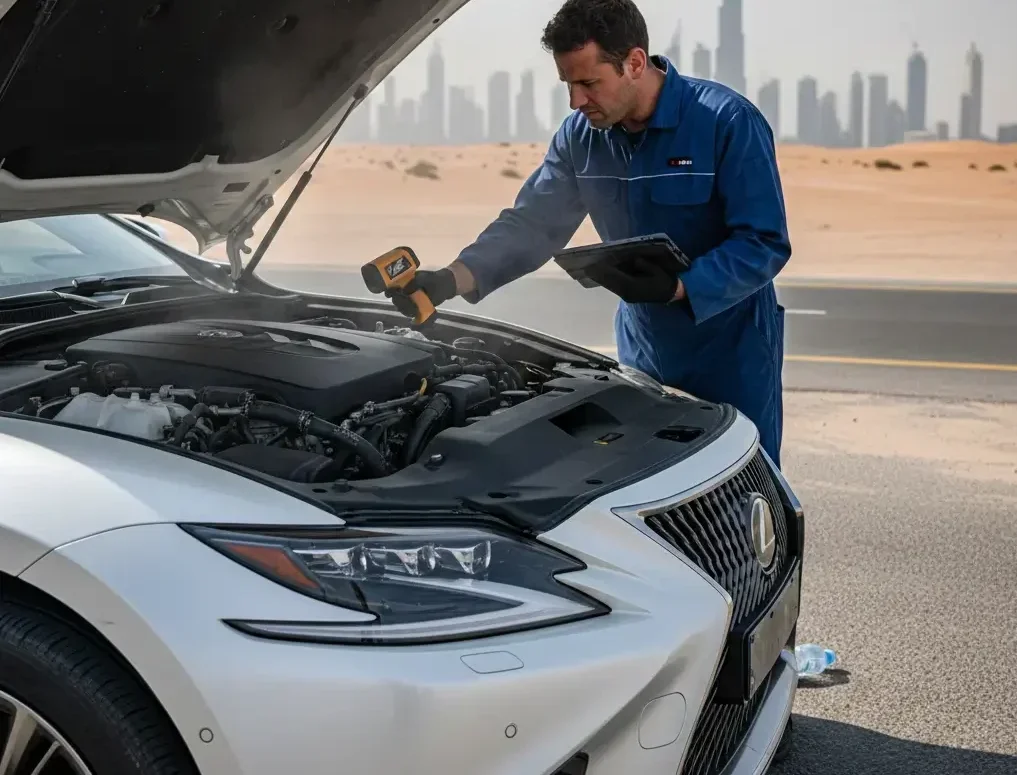
Dubai’s driving environment puts exceptional strain on car engines. Extreme heat, constant stop-and-go traffic, long idle times, and airborne sand all accelerate wear on critical engine components—often turning minor issues into major failures if left unaddressed. Even well-maintained vehicles can develop engine problems faster in Dubai than in milder climates.
From sudden engine overheating and power loss to oil leaks and unusual noises, these issues rarely appear without warning. The challenge for most drivers is knowing which symptoms signal real danger, what causes them in Dubai conditions, and how to fix them before repair costs escalate.
This guide breaks down the top 5 car engine issues in Dubai, explaining:
- The early warning signs drivers should never ignore
- The Dubai-specific causes behind each problem.
- the most effective repair solutions, and
- practical prevention tips to protect your engine long-term
Whether you commute daily through heavy city traffic or regularly drive long distances across the UAE, understanding these engine problems will help you avoid breakdowns, reduce repair costs, and extend the life of your vehicle.
Why Car Engines Fail Faster in Dubai’s Climate
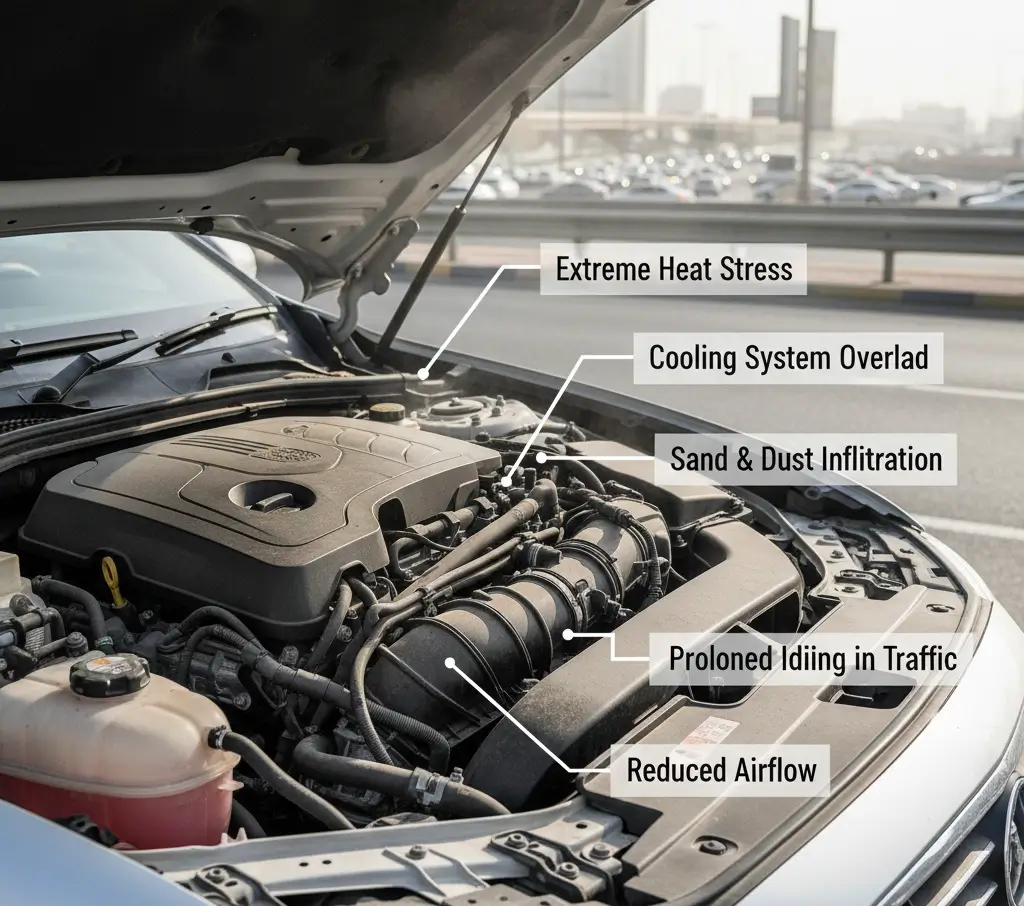
Dubai’s environment creates a unique combination of stress factors that accelerate engine wear far more quickly than in moderate climates. Prolonged exposure to extreme heat, constant urban congestion, and fine airborne sand affects everything from cooling efficiency to combustion quality. Even engines designed for hot regions can deteriorate faster without climate-specific maintenance.
Extreme Heat and Cooling System Stress
Dubai’s high ambient temperatures push cooling systems to their limits. Coolant degrades more quickly, radiators lose efficiency, and rubber hoses and seals harden due to constant heat. When cooling components weaken, engines are more likely to overheat, especially during long drives or extended periods of idling. Without proper coolant levels and heat-resistant engine oil, internal components can suffer permanent damage.
Stop-and-Go Traffic and Prolonged Idling
Heavy traffic is a daily reality in Dubai, and frequent stop-and-go driving prevents engines from maintaining optimal operating temperatures. Prolonged idling with air conditioning running places an extra load on the engine, radiator fans, and cooling system. Over time, this increases the risk of overheating, fuel inefficiency, and premature component failure.
Sand, Dust, and Reduced Airflow
Fine desert sand and dust easily penetrate air intake systems, even in modern vehicles. Clogged air filters restrict airflow, forcing the engine to work harder and burn fuel less efficiently. This not only reduces performance but also increases internal wear, especially on pistons, valves, and sensors that rely on clean airflow for proper combustion.
Fuel Quality and Driving Habits in the UAE
Fuel quality variations and aggressive driving habits—such as rapid acceleration in high heat—can place additional strain on engines. Poor combustion efficiency, combined with heat stress, accelerates carbon buildup and oil breakdown. Over time, this leads to reduced engine efficiency, higher maintenance costs, and shorter engine life.
Used and Older Vehicles in Dubai: Extra Engine Risks to Watch
Dubai has one of the largest used-car markets in the region, and while many pre-owned vehicles are well maintained, older engines face higher risks in extreme climates.
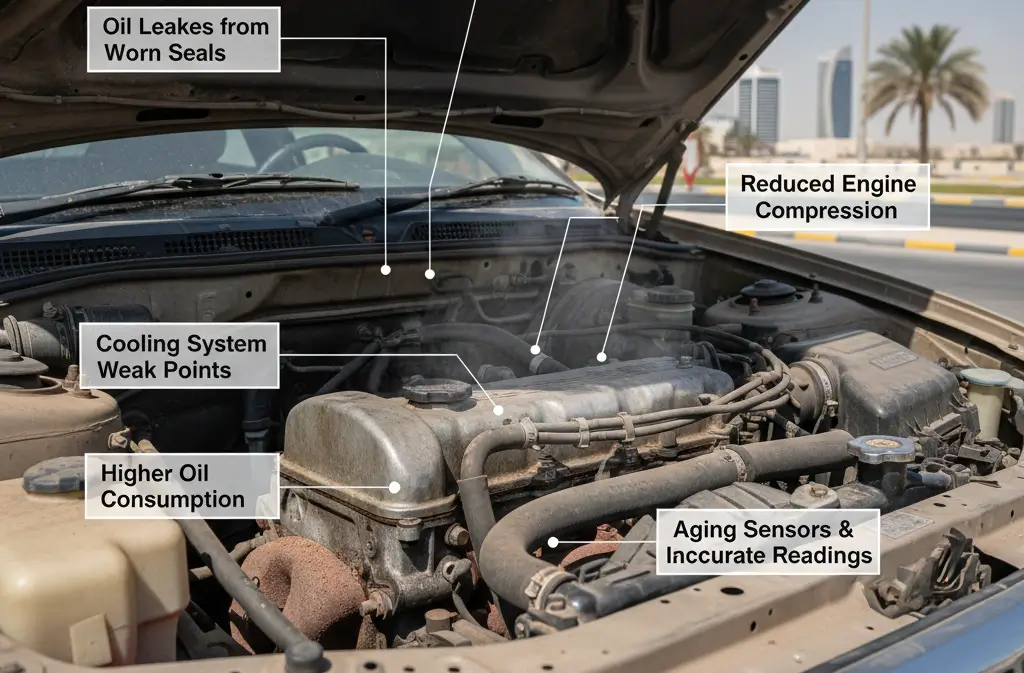
Over time, seals, gaskets, hoses, and sensors naturally degrade. When combined with Dubai’s heat and sand exposure, this wear accelerates issues such as:
- Oil leaks from hardened seals
- Cooling system failures
- Reduced compression and power loss
- Increased oil consumption
- Sensor inaccuracies
For used or high-mileage vehicles, preventive inspections are even more critical. Engine diagnostics, cooling system checks, and oil system inspections should be performed more frequently to identify weaknesses before they turn into major failures.
If you’re buying or driving a used car in Dubai, investing in early inspections is far cheaper than dealing with unexpected engine repairs later.
1. Engine Overheating (Dubai’s #1 Engine Killer)
Engine overheating is the most common and destructive engine issue faced by drivers in Dubai. With summer temperatures frequently exceeding 45°C, engines are forced to operate under extreme thermal stress—especially during heavy traffic and prolonged idling. If overheating is ignored, it can quickly escalate into serious damage such as warped cylinder heads, blown head gaskets, or even a cracked engine block.
Common Symptoms of Engine Overheating
Engine overheating rarely happens without warning. Early signs include:
- A rapidly rising temperature gauge
- Coolant or temperature warning light on the dashboard
- Steam is coming from the bonnet.
- A sweet or burning smell from the engine bay
- Sudden loss of engine power
Recognizing these symptoms early can prevent catastrophic engine failure.
Why Engine Overheating Happens in Dubai
Dubai’s driving conditions amplify several overheating risk factors:
Extreme Heat and Cooling System Overload
High ambient temperatures reduce the efficiency of radiators, coolant, and engine oil. Cooling systems work harder and wear out faster, especially if coolant quality or levels are inadequate.
Low Coolant Levels or Radiator Issues
Coolant evaporates more quickly in hot climates. Leaks, clogged radiator fins from sand, or failing radiator caps reduce heat dissipation and raise engine temperatures rapidly.
Air Conditioning Use in Heavy Traffic
Constant AC usage during stop-and-go traffic puts additional load on the engine and radiator fans. Prolonged idling prevents airflow, making it harder for the cooling system to regulate temperature.
How to Fix Engine Overheating Before Damage Occurs
Immediate Steps to Take
- Turn off the AC and safely pull over
- Allow the engine to cool before opening the bonnet.
- Check coolant levels once the engine cools.
- Never open the radiator cap while the engine is hot.
Professional Repair Solutions in Dubai
- Cooling system pressure testing
- Radiator flushing or replacement
- Thermostat and water pump inspection
- Fan motor and sensor diagnostics
- Repairing coolant leaks and hose failures
Prompt professional diagnosis can prevent engine seizure or internal damage.
How to Prevent Engine Overheating in Dubai
- Check coolant levels regularly and use manufacturer-approved coolant
- Flush the radiator annually to remove heat-trapping deposits.
- Replace worn hoses, belts, and radiator caps proactively.y
- Service the cooling system before the peak summer months.
- Avoid prolonged idling whenever possible.
Recommended Service Intervals for Dubai Drivers
In extreme climates, cooling systems should be inspected every 6 months rather than yearly to ensure optimal performance.
2. Engine Misfires and Rough Idling
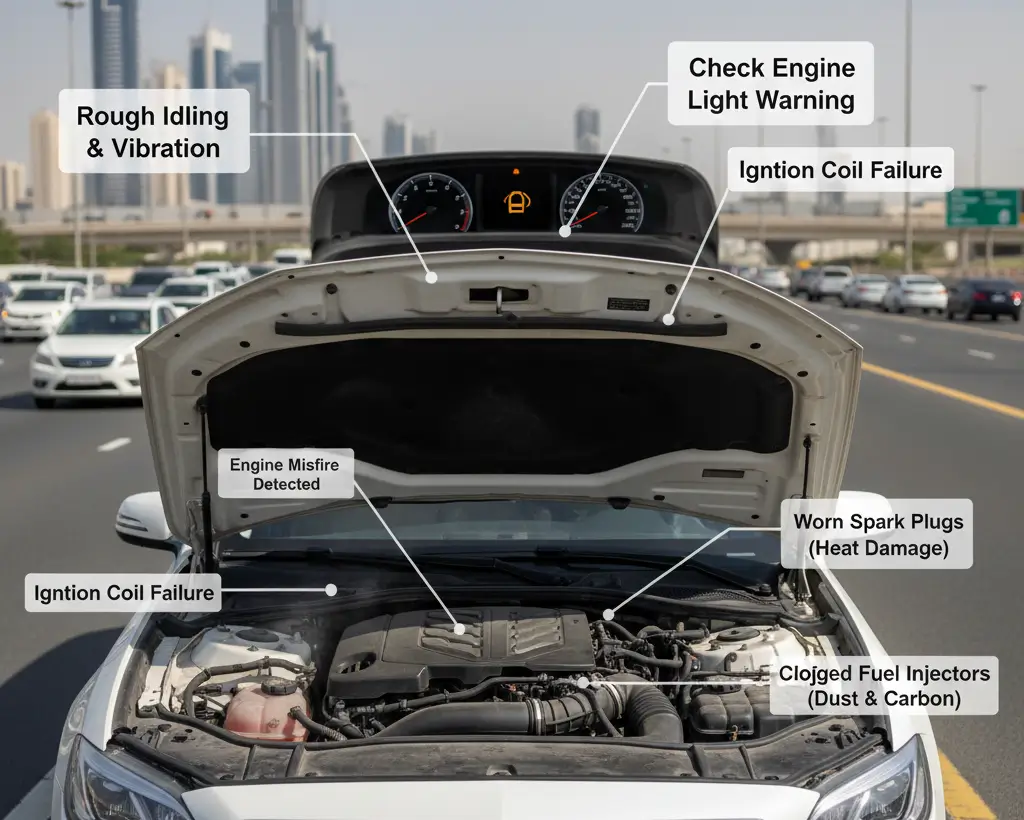
Engine misfires are one of the most deceptive engine problems in Dubai. They often begin subtly—slight vibrations or inconsistent idling—but can quickly escalate into serious mechanical and emissions-related damage if ignored. A misfire occurs when one or more cylinders fail to ignite the air–fuel mixture properly, disrupting engine balance and efficiency.
In Dubai’s heat- and dust-heavy environment, misfires tend to appear earlier and progress faster than in cooler regions.
Warning Signs to Watch
Early detection is critical. Common symptoms of engine misfires include:
- Engine shaking or vibration, especially at idle
- Rough or unstable idling at traffic lights
- Noticeable loss of power during acceleration
- Increased fuel consumption
- Flashing or steady check engine light
These symptoms indicate incomplete combustion and should never be dismissed as “normal” engine behavior.
Root Causes in UAE Conditions
Several Dubai-specific factors increase the likelihood of engine misfires:
Spark Plug Wear from Extreme Heat
High operating temperatures accelerate spark plug degradation, reducing their ability to ignite fuel efficiently. Worn plugs cause delayed or inconsistent combustion, especially during heavy traffic driving.
Fuel Injector Clogging Due to Dust and Contaminants
Fine dust particles and carbon buildup restrict injector spray patterns. When fuel delivery becomes uneven, cylinders misfire, and engine balance is lost.
Ignition Coil and Electrical Component Failure
Heat stress weakens ignition coils, wiring, and sensors. Electrical components exposed to prolonged heat cycles are more prone to intermittent failures—one of the hardest misfire causes to diagnose without proper tools.
Fixing Engine Misfires Safely
Basic Checks You Can Perform
- Observe engine behavior during startup and idle
- Monitor dashboard warning lights.
- Check service history for overdue spark plug replacement.t
When Professional Diagnostics Are Essential
Persistent misfires require OBD diagnostics and ignition system testing. Professional inspections can identify failing coils, injector issues, air intake leaks, or sensor malfunctions before they cause secondary damage.
Why Delaying Repairs Is Risky
Driving with unresolved misfires can overheat and destroy the catalytic converter, increase engine wear, and lead to costly emissions system failures—repairs that are far more expensive than early intervention.
Prevention Tips for Dubai Drivers
- Replace spark plugs at manufacturer-recommended intervals (often sooner in hot climates)
- Use high-quality fuel from reputable stations.
- Schedule fuel injector cleaning during routine services
- Perform engine diagnostics at the first sign of rough idling.
- Avoid prolonged driving with an active check engine light.
Regular inspections tailored to Dubai’s climate significantly reduce the risk of misfires and long-term engine damage.
3. Oil Leaks and Excessive Oil Consumption
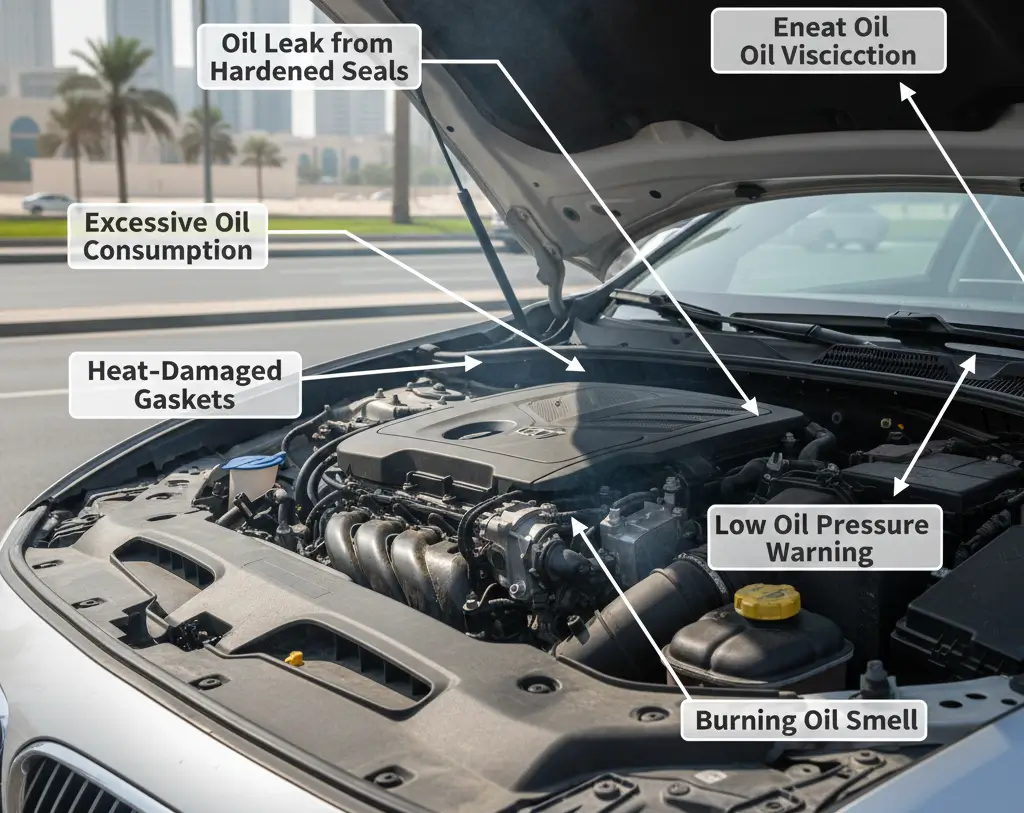
Oil-related problems are among the fastest ways to destroy an engine in Dubai. Extreme heat accelerates oil degradation, weakens seals, and increases internal pressure—making oil leaks and excessive consumption far more common than in cooler climates. If oil issues are ignored, engines can suffer severe internal damage within a short period of time.
Signs Your Engine Is Losing Oil
Oil problems often develop gradually, but the warning signs are usually clear:
- Oil stains or puddles under the parked vehicle
- A burning oil smell, especially after driving
- Blue or gray exhaust smoke
- Frequent need to top up engine oil
- Low oil pressure warning light
Any of these symptoms indicates that lubrication is compromised and immediate attention is required.
Why Oil Problems Are Common in Dubai
Heat-Damaged Seals and Gaskets
Prolonged exposure to high temperatures causes rubber seals and gaskets to harden, crack, and lose elasticity. Valve cover gaskets, oil pan seals, and turbo oil lines are especially vulnerable in Dubai’s climate.
Incorrect Oil Grade for Hot Conditions
Using engine oil that is not rated for high-temperature environments leads to faster thinning and breakdown. Once oil loses viscosity, it fails to protect internal components, increasing friction and accelerating wear.
How to Fix Oil Leaks and Consumption Issues
Identifying the Source of the Leak
Professional inspections help pinpoint whether oil is leaking from gaskets, seals, filters, drain plugs, or turbo components. Cleaning the engine and performing pressure tests often reveals the exact failure point.
Repair vs Replacement Decisions
- Minor gasket or seal failures can usually be repaired quickly.
- Widespread leaks or oil burning may require component replacement.
- Turbocharged engines may need additional oil system checks.
Addressing oil leaks early is significantly cheaper than repairing internal engine damage caused by oil starvation.
How to Prevent Oil-Related Engine Damage in Dubai
- Use manufacturer-recommended synthetic oil designed for high-temperature climates.
- Check oil levels more frequently during the summer months.
- Follow shorter oil change intervals suited for Dubai driving conditions.
- Replace aging gaskets and seals proactively, not reactively.
- Avoid driving with low oil levels, even for short distances.
Maintenance That Actually Works
In Dubai’s heat, oil inspections every 2–3 weeks and oil changes slightly earlier than standard intervals can dramatically extend engine life.
4. Loss of Engine Power and Poor Acceleration
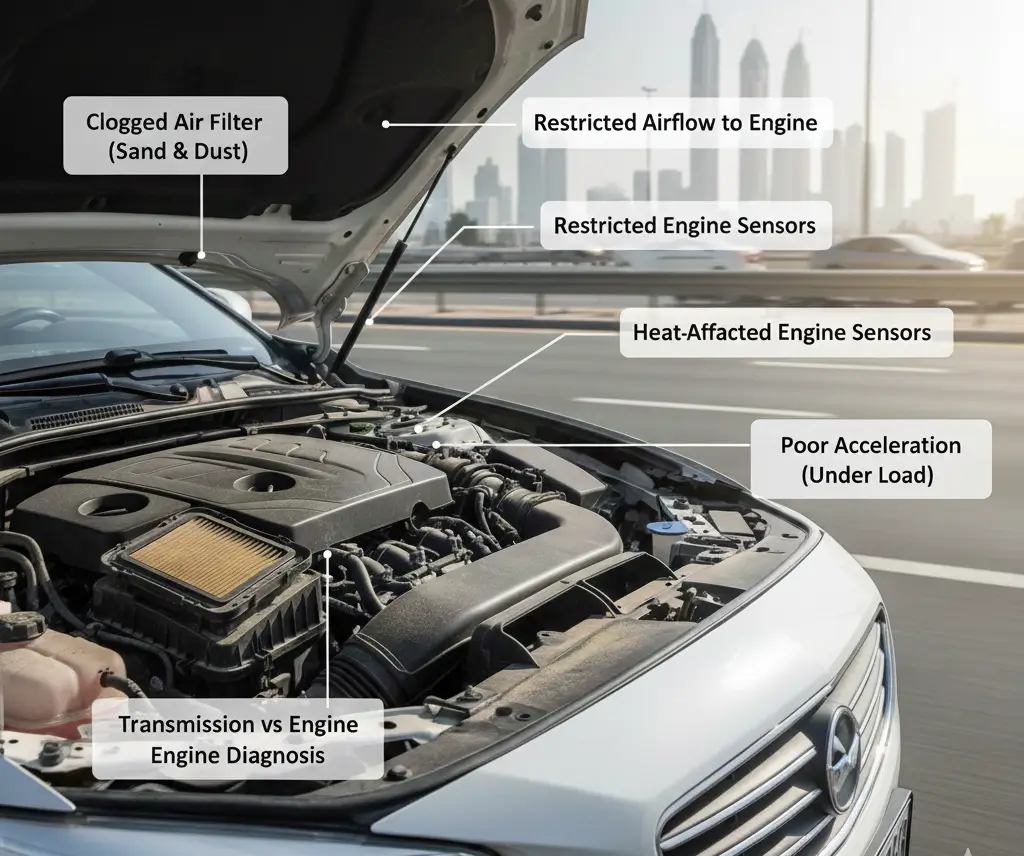
Loss of engine power is one of the most frustrating problems Dubai drivers experience. When acceleration feels sluggish or inconsistent, it’s often a sign that the engine is struggling to breathe, fuel efficiently, or communicate accurately with its sensors. In Dubai’s sandy, high-temperature environment, these issues develop faster and worsen quickly if ignored.
Symptoms Drivers Notice
Reduced engine performance usually shows up in everyday driving situations, including:
- Sluggish or delayed acceleration
- Engine hesitation when pressing the throttle
- Difficulty overtaking or climbing inclines
- Reduced fuel efficiency despite normal driving
- Inconsistent power delivery at higher speeds
These symptoms indicate that the engine is no longer operating at optimal efficiency.
Dubai-Specific Causes of Power Loss
Clogged Air Filters from Sand and Dust
Fine desert sand quickly clogs air filters, restricting airflow to the engine. When airflow is limited, combustion becomes inefficient, leading to noticeable power loss and higher fuel consumption.
Sensor Failures Due to Heat Exposure
Sensors such as the MAF (Mass Air Flow) sensor, oxygen sensor, and throttle position sensor are highly sensitive to heat. Prolonged exposure to extreme temperatures causes inaccurate readings, forcing the engine control unit to adjust fuel delivery incorrectly.
Transmission vs Engine Confusion
Power loss is often misdiagnosed as an engine issue when the transmission is actually responsible. Delayed gear shifts, slipping, or poor throttle response can mimic engine problems—making professional diagnostics essential before repairs begin.
How to Restore Engine Performance
A Proper Diagnostic Approach
Effective repairs start with scanning fault codes, inspecting air intake systems, and testing sensors under real operating conditions. Guessing or replacing parts without diagnosis often leads to unnecessary expenses.
Repairs That Make the Biggest Difference
- Replacing clogged air filters
- Cleaning the throttle body and intake system
- Repairing or recalibrating faulty sensors
- Addressing fuel delivery or turbo-related issues
- Verifying transmission health before engine repairs
Targeted repairs restore power more reliably than broad part replacements.
Prevention & Performance Tips for Dubai Drivers
- Replace air filters more frequently due to sandy conditions
- Schedule intake and throttle body cleaning during routine servicing
- Avoid aggressive acceleration in extreme heat.
- Allow the engine to warm up and cool down properly.
- Address warning lights or performance drops immediately.
Air Filtration Best Practices
Using high-quality air filters and inspecting them regularly is one of the simplest ways to maintain engine power in Dubai.
5. Strange Engine Noises (Knocking, Ticking, Grinding)
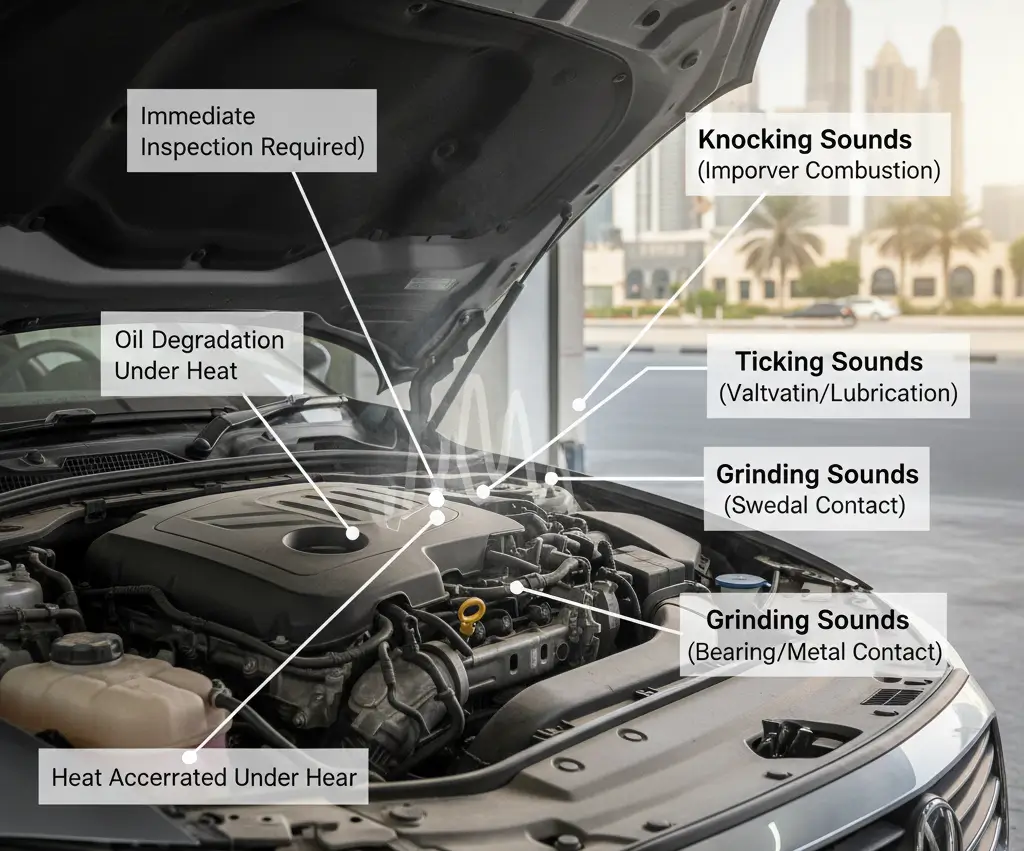
Unusual engine noises are never random—and in Dubai’s extreme climate, they escalate faster than most drivers expect. Knocking, ticking, or grinding sounds usually indicate internal stress, lubrication failure, or mechanical wear. Ignoring these noises often turns minor issues into complete engine failure within a short time.
Types of Engine Noises and What They Mean
Different sounds point to different problems, and knowing the difference matters:
Knocking Sounds
A deep knocking or pinging noise often signals improper combustion, worn bearings, or the use of low-octane fuel. In hot conditions, knocking can quickly damage pistons and connecting rods.
Ticking Sounds
Ticking usually comes from the valvetrain area and may indicate low oil pressure, worn lifters, or insufficient lubrication. While ticking may start quietly, it often worsens rapidly if oil quality is compromised.
Grinding Sounds
Grinding noises are the most serious. They typically suggest metal-on-metal contact caused by severe wear, failed bearings, or internal component damage. This sound requires immediate attention.
Noises You Should Never Ignore
Any noise that gets louder with engine speed, appears suddenly, or is accompanied by warning lights should be treated as urgent.
Why These Issues Escalate Quickly in Dubai
Heat-Accelerated Mechanical Wear
Extreme temperatures reduce oil viscosity faster and increase friction between internal components. Parts that might survive years in cooler climates can fail much sooner in Dubai.
Oil Breakdown Under High Temperatures
When engine oil degrades, it loses its ability to lubricate and cushion moving parts. This accelerates bearing wear, valve damage, and internal scoring—often turning noise into failure within days or weeks.
How to Fix Engine Noise Issues Before Failure
Immediate Actions to Take
- Reduce driving immediately when unusual noises appear
- Check oil level and condition.
- Avoid high RPMs and aggressive acceleration.
- Schedule a professional inspection without delay.
Repair Timelines and Urgency Levels
- Ticking noises may allow limited driving with prompt diagnosis.
- Knocking noises require urgent inspection.n
- Grinding noises demand immediate shutdown and towing.
Early intervention often limits repairs to specific components rather than full engine rebuilds.
Prevention Strategies for Dubai Drivers
Oil Health Monitoring
- Use high-quality, heat-rated synthetic oil
- Check oil condition regularly, not just oil level.
- Shorten oil change intervals during summer.
Early Diagnostics in Dubai Conditions
- Address unfamiliar noises immediately.
- Schedule engine inspections at the first sign of abnormal sound
- Combine diagnostics with oil analysis and sensor checks.
Preventive diagnostics are far more affordable than repairing internal engine damage caused by delayed action.
DIY Fixes vs Professional Engine Repairs in Dubai
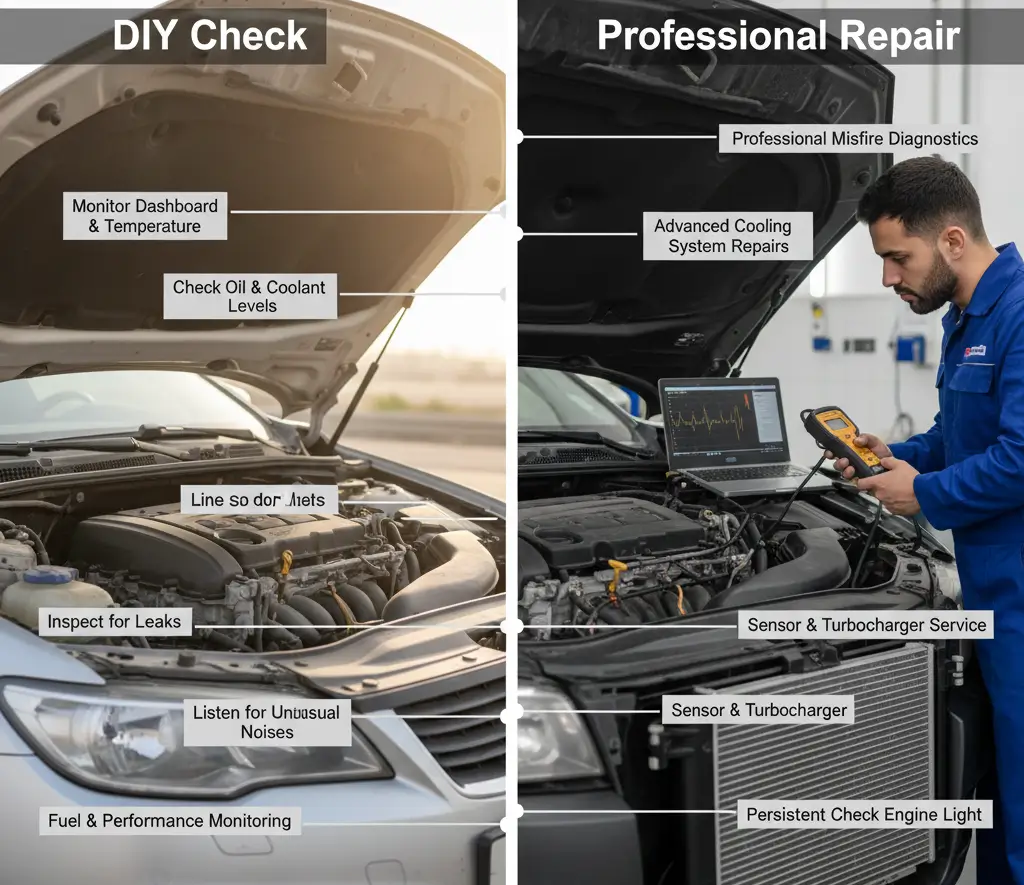
Not every engine issue requires an immediate workshop visit—but knowing where to draw the line is critical, especially in Dubai’s extreme driving conditions. While basic checks can help identify early problems, attempting complex repairs without proper tools or expertise often leads to greater damage and higher costs.
What You Can Safely Check Yourself
Some early-stage engine issues can be identified through simple, non-invasive checks:
- Monitoring dashboard warning lights and temperature gauges
- Checking engine oil level and visible coolant levels
- Inspecting for oil or coolant leaks under the vehicle
- Listening for new or unusual engine noises
- Noting changes in fuel consumption or engine performance
These checks help you recognize problems early—but they should never replace proper diagnostics.
What Should Always Be Handled by Professionals
Certain engine repairs require specialized tools, training, and diagnostic equipment:
- Engine overheating diagnostics and cooling system repairs
- Misfire troubleshooting involving ignition coils, injectors, or sensors
- Oil leak repairs requiring gasket or seal replacement
- Power loss related to sensors, turbochargers, or fuel systems.
- Any issue triggering a persistent or flashing check engine light
Professional workshops in Dubai use advanced scanning systems and thermal diagnostics to pinpoint faults accurately, reducing the risk of misdiagnosis.
Risks of Delaying Engine Repairs in Dubai
Delaying professional repairs is especially risky in hot climates:
- Minor overheating can warp cylinder heads
- Oil leaks can lead to rapid internal wear or engine seizure.
- Misfires can destroy catalytic converters.
- Sensor failures can cause poor combustion and higher fuel consumption.
What begins as a small, affordable repair can quickly turn into a major engine rebuild if ignored.
How Much Do Engine Repairs Cost in Dubai?
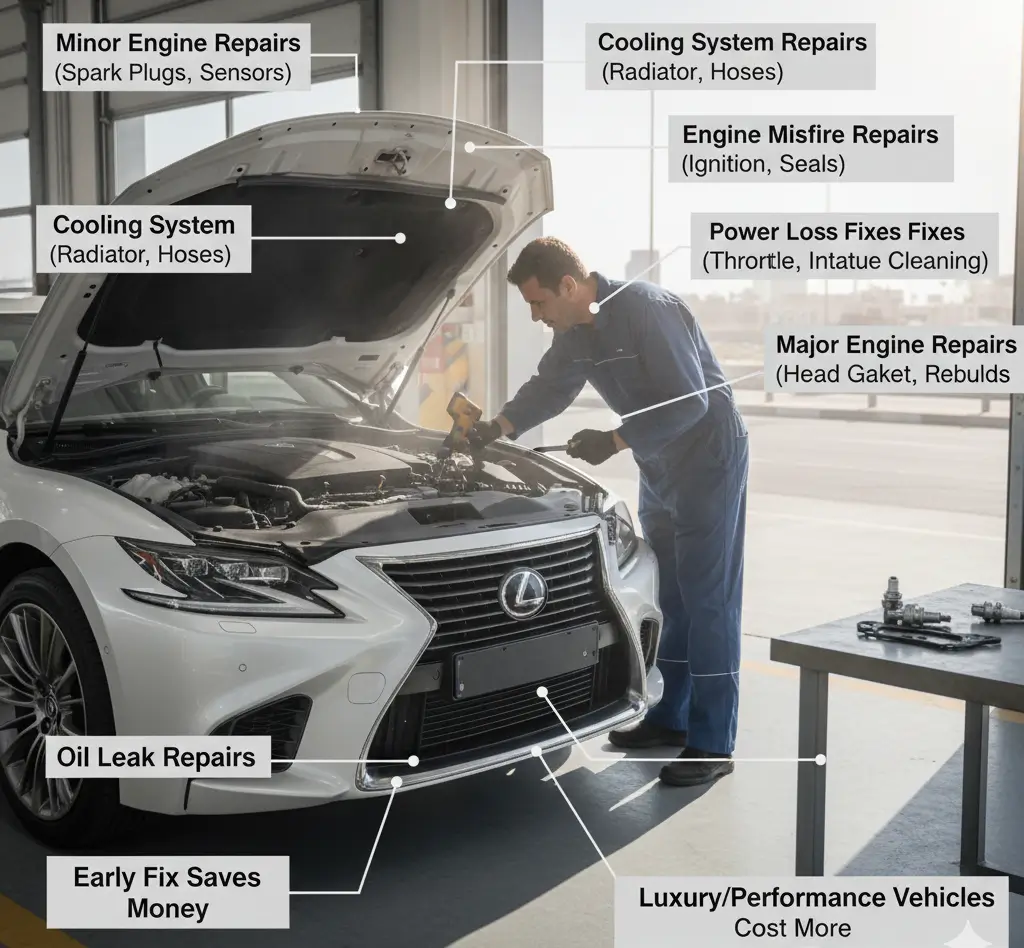
Engine repair costs in Dubai can vary widely depending on the type of problem, vehicle make, and how early the issue is addressed. Minor engine-related repairs are usually manageable, but delays often turn affordable fixes into expensive overhauls—especially in Dubai’s extreme heat.
Understanding cost ranges and pricing factors helps drivers make informed decisions before damage escalates.
Engine Repair Cost Estimates in Dubai
Note: Prices vary based on vehicle make, engine type, and damage severity.
Engine Issue Type | Common Repairs Involved | Estimated Cost Range (AED) |
Minor Engine Issues | Spark plugs, sensors, air filters, and oil leaks | 300 – 1,500 |
Cooling System Repairs | Radiator, thermostat, hoses, coolant flush | 800 – 3,000 |
Engine Misfires | Ignition coils, injectors, diagnostics | 600 – 2,500 |
Oil Leak Repairs | Gaskets, seals, and oil pan repairs | 700 – 4,000 |
Power Loss Issues | Sensors, throttle body, intake cleaning | 500 – 2,000 |
Major Engine Repairs | Head gasket, timing components, rebuilds | 5,000 – 20,000+ |
General Engine Repair Cost Ranges
While exact pricing depends on the vehicle and workshop, engine repairs in Dubai typically fall into two broad categories:
Minor Engine Repairs
These include oil leaks, sensor replacements, spark plugs, air filters, and cooling system components. When addressed early, these repairs are generally affordable and can often be completed within a short service window.
Major Engine Repairs
Severe overheating, prolonged misfires, internal oil starvation, or mechanical damage may require head gasket repairs, timing component replacement, or partial engine rebuilds. These repairs are significantly more expensive and often involve extended downtime.
The difference in cost between early intervention and delayed repair can be substantial.
What Affects Engine Repair Pricing in Dubai?
Several factors influence how much you’ll pay for engine repairs:
- Vehicle brand and engine complexity
- Availability and cost of replacement parts
- Extent of damage caused by delayed repairs
- Labor time required for diagnostics and repair
- Whether genuine or aftermarket components are used
Luxury, performance, and turbocharged vehicles typically cost more to repair due to tighter tolerances and specialized parts.
Why Early Fixes Save You Money
In Dubai’s climate, engine issues escalate faster than most drivers expect. Heat accelerates wear, oil breakdown, and component failure—meaning small faults quickly multiply.
- A minor oil leak can lead to internal engine wear.
- Overheating can warp engine components.
- Misfires can damage exhaust and emissions systems.
Addressing problems early not only reduces repair costs but also protects engine reliability, fuel efficiency, and long-term vehicle value.
When to Visit a Professional Car Workshop in Dubai
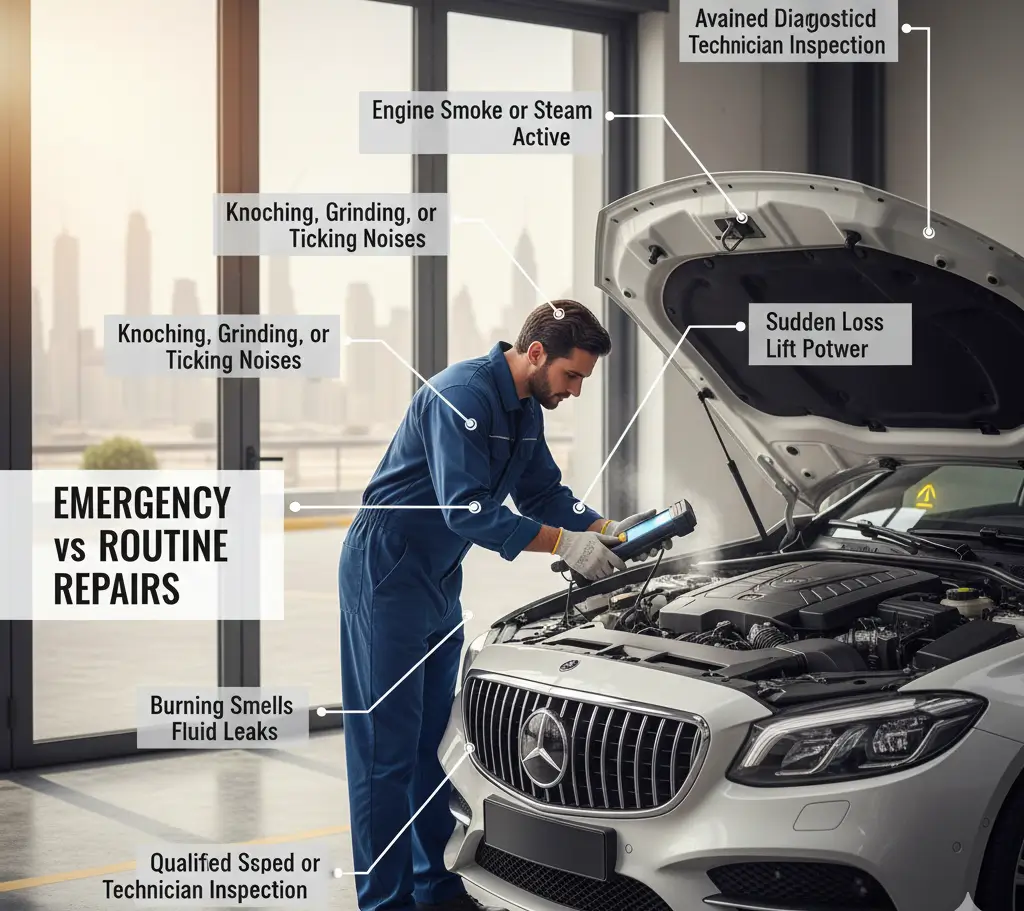
While early engine issues may start subtly, Dubai’s extreme heat and driving conditions can cause problems to escalate quickly. Knowing when a workshop visit is non-negotiable helps prevent breakdowns, excessive repair costs, and long-term engine damage.
Red-Flag Symptoms You Should Never Ignore
Certain warning signs indicate that immediate professional attention is required:
- Smoke coming from the engine bay or exhaust
- Knocking, grinding, or loud ticking engine noises
- Persistent or flashing check engine light
- Sudden loss of engine power or poor acceleration
- Engine overheating or repeated temperature spikes
- Strong burning smells or visible fluid leaks
These symptoms often signal internal damage or system failure and should not be “driven through,” especially in Dubai’s heat.
Emergency Repairs vs Routine Repairs
Emergency Repairs (Immediate Visit Required)
- Engine overheating
- Severe misfires or shaking
- Grinding or knocking noises
- Oil pressure warning light
- Smoke or steam
Continuing to drive in these situations can cause irreversible engine damage within minutes.
Routine but Urgent Repairs
- Minor oil leaks
- Reduced fuel efficiency
- Intermittent warning lights
- Gradual loss of engine performance
These issues should still be addressed promptly to prevent escalation, even if the vehicle remains drivable.
Choosing the Right Garage in Dubai
Not all workshops are equipped to handle modern engine diagnostics—especially in Dubai, where heat, sand, and heavy traffic accelerate engine wear. When selecting a professional car workshop in Dubai, look for:
- Advanced diagnostic and scanning tools capable of identifying engine faults accurately
- Proven experience with Dubai driving conditions, including extreme heat and stop-and-go traffic
- Transparent inspection and repair processes, with clear explanations before work begins.
- Qualified technicians familiar with your specific vehicle make and engine type.
- Clear communication about repair timelines, costs, and long-term engine health
Reputable car engine repair specialists in Dubai don’t just fix the visible problem—they perform a full system check. This includes inspecting the cooling system, fuel delivery, exhaust components, and engine sensors to ensure the issue is resolved at the root and doesn’t return under real-world driving conditions.
How to Prevent Engine Problems in Dubai (Expert Checklist)
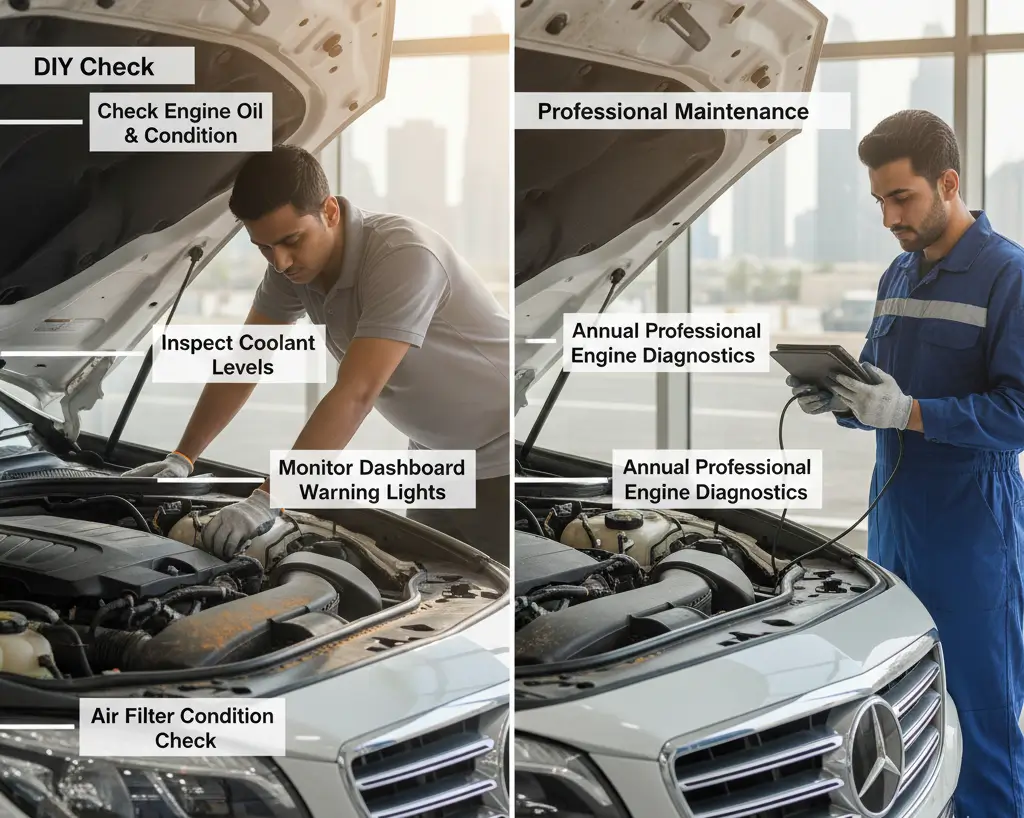
Preventing engine damage in Dubai isn’t about occasional servicing—it’s about adapting your maintenance routine to extreme heat, sand exposure, and urban traffic. This checklist breaks prevention into monthly, seasonal, and long-term actions that actually work in UAE conditions.
Monthly Engine Health Checks (High-Impact, Low Effort)
These quick checks help catch small issues before they become costly engine failures:
- Check engine oil level and condition – Dark or burnt-smelling oil breaks down faster in heat
- Inspect coolant levels – Low coolant is a leading cause of engine overheating in Dubai.
- Monitor dashboard warning lights – Never ignore temperature or check-engine alerts.
- Visual leak inspection – Look for oil or coolant stains under the vehicle
Air filter condition check – Sand and dust clog filters faster than in cooler climates.
Seasonal Maintenance for Dubai’s Climate Extremes
As temperatures rise or driving patterns change, your engine needs extra protection:
- Pre-summer cooling system inspection (radiator, hoses, fans, thermostat)
- More frequent oil changes during hotter months to prevent oil breakdown
- Battery and electrical system checks, as heat affects ignition components.
- Fuel system cleaning to maintain efficient combustion and performance.
AC system strain monitoring, especially during long traffic delays
Long-Term Engine Protection Strategies
These habits significantly extend engine life and reduce repair costs over time:
- Use manufacturer-recommended oil grades suitable for high-temperature environments
- Stick to realistic service intervals, not generic mileage guidelines.
- Avoid aggressive driving, especially in traffic or desert conditions.
- Reduce unnecessary engine load by limiting excess weight
- Schedule professional engine diagnostics annually, even without visible issues
Proactive maintenance is the most cost-effective form of car engine repair. Addressing wear early prevents overheating, misfires, oil leaks, and performance loss—keeping your engine reliable despite Dubai’s demanding conditions.
Final Thoughts: Protecting Your Engine in Dubai’s Climate
Dubai’s extreme driving conditions make engine care more critical than in almost any other region. From intense heat and heavy traffic to airborne sand and long idle times, engines here face constant stress that accelerates wear and failure.
The five most common engine issues Dubai drivers face—overheating, misfires, oil leaks, power loss, and abnormal engine noises—rarely appear without warning. In most cases, early symptoms such as temperature spikes, rough idling, fluid loss, or unusual sounds provide a clear opportunity to act before damage becomes severe and costly.
The key takeaway is simple:
Early diagnosis, climate-specific maintenance, and timely professional repairs are the most effective ways to protect your engine in Dubai.
By following preventive maintenance schedules, using heat-rated fluids, monitoring warning signs, and addressing issues promptly, drivers can:
- Avoid sudden breakdowns
- Reduce long-term repair costs.
- Extend engine lifespan
- Maintain fuel efficiency and performance.
In a city where engines work harder every day, proactive care isn’t optional—it’s essential.
Read Also:Common Aston Martin Engine Problems
Frequently Asked Questions About Car Engine Problems in Dubai
How often should I service my engine in Dubai?
In Dubai’s climate, engines should be inspected more frequently than the manufacturer’s minimums. Basic engine checks every 3–4 months and full servicing at shorter intervals—especially during summer—help prevent overheating, oil breakdown, and premature wear.
Is engine overheating common even in newer cars?
Yes. Even modern vehicles are vulnerable to overheating in Dubai due to extreme temperatures, prolonged idling, and heavy AC usage. Cooling system components such as radiators, hoses, and thermostats still require regular inspection, regardless of vehicle age.
Can I drive short distances with a check engine light on?
It depends. A steady check engine light may allow limited driving, but a flashing light indicates active misfires or serious faults and should be addressed immediately. In Dubai’s heat, continuing to drive with warning lights can rapidly escalate damage.
Does Dubai heat affect synthetic engine oil lifespan?
Yes. High temperatures accelerate oil oxidation and viscosity breakdown—even with high-quality synthetic oil. That’s why oil change intervals in Dubai are often shorter than standard recommendations, especially during the summer months.
Is engine repair more expensive in summer?
Often, yes. Summer heat increases failure rates and demand for repairs, while heat-related damage tends to escalate faster. Early diagnosis before peak summer can significantly reduce repair costs and downtime.